Daily Life in Bible Times
Background information on family, marriage, food, technology, and social customs in biblical times.
Family & Relationships
Family life in biblical times revolved around extended households. Topics covered include the structure of the family, the roles of virgins and maidens, wedding customs, and the institution of marriage. Childbirth practices, responses to adultery, and divorce procedures are also explored, along with the levirate law and its social function.
Family Life
Food, Meals & Sacrifice
What people ate and how they prepared food reveals much about daily existence. The site examines Bible food and meals, the distinction between clean and unclean foods, and the role of sacrifice — including the difficult subject of human sacrifice — in ancient religious practice. Money and marriage customs also intersect with food traditions in notable ways.
Food & Diet
Sacrifice & Economy
Ancient Technology
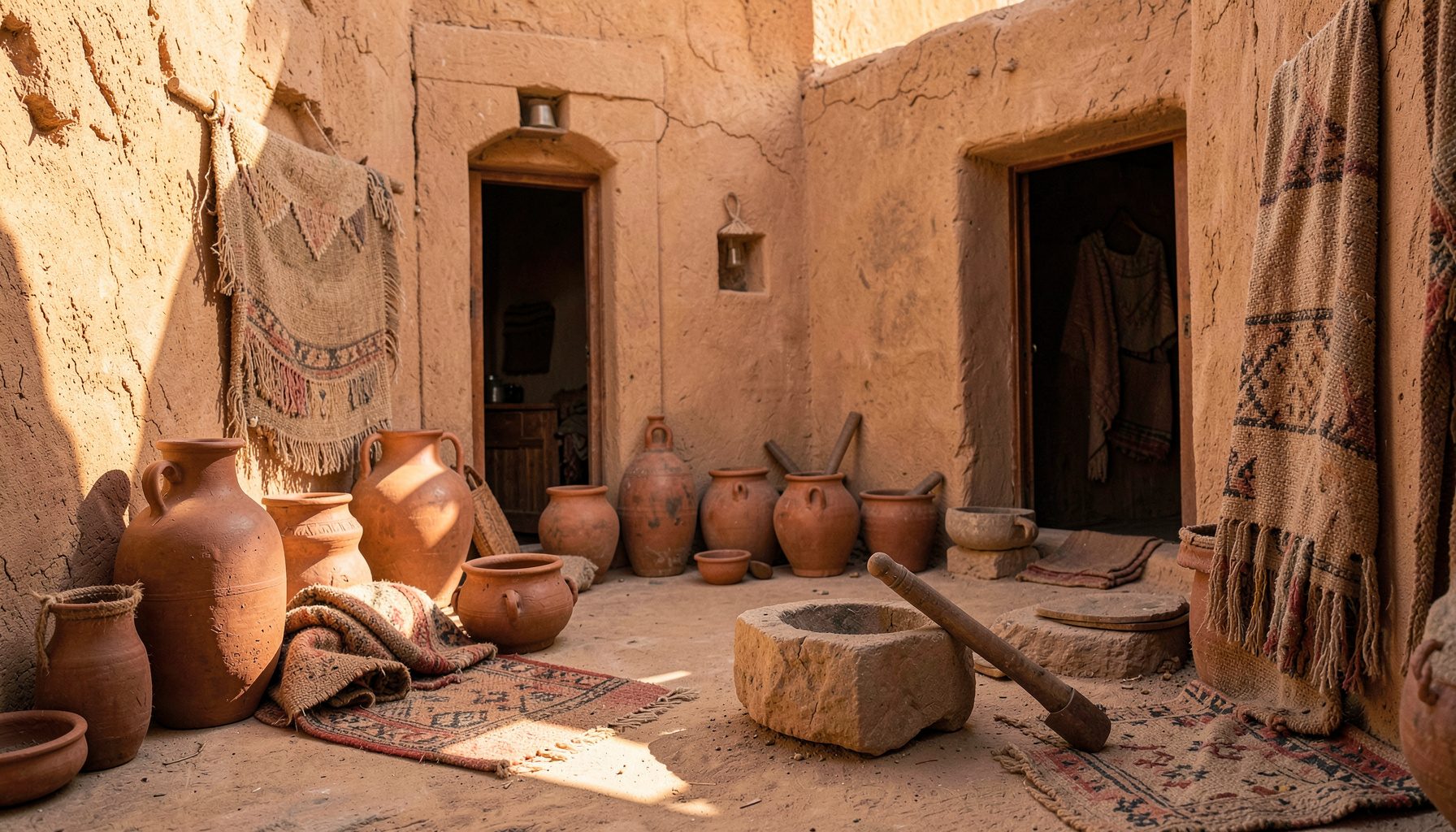
Everyday technology in the biblical world encompassed tools for farming, building, food preparation, and textile production. Understanding these innovations sheds light on how ordinary people lived and worked.
Daily life in biblical times was deeply shaped by the rhythms of family, work, and faith. Extended households formed the basic social unit, with multiple generations living and working together under one roof. Marriage was a central institution, often arranged by families to strengthen bonds between clans. Wedding celebrations could last for days, filled with music, feasting, and joyful processions. Women and men each had distinct roles, though daily responsibilities frequently overlapped in agricultural settings. Children were considered a blessing from God, and families took great care to raise them in the traditions of their ancestors. Even the simplest routines — grinding grain, drawing water, tending flocks — were woven with prayers and reminders of God's covenant promises.
The Bible also addresses the difficult realities of ancient family life with honesty and compassion. Adultery was treated as a serious offense against both God and community, often carrying severe consequences. Divorce procedures existed but were governed by strict regulations designed to protect vulnerable parties. The levirate law provided a unique social safety net, requiring a brother to marry his deceased sibling's widow to preserve the family line and inheritance. Childbirth was both a joyous and dangerous event, with women relying on midwives and communal support. These customs may seem foreign to modern readers, yet they reveal a world where community responsibility, faithfulness, and survival were deeply intertwined with the worship of the one true God.